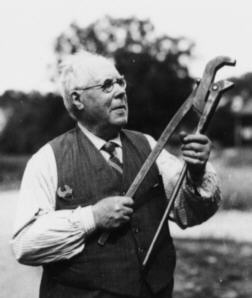
J.P. Johansson- the man of the century in Enköping. The inventor and industrialist Johan Petter Johansson (1853-1943) successfully managed an extensive industrial complex in Enköping for 57 years. The products that he made in his factories, were those he had invented and patented himself. He was active as an inventor for 55 years and was in possession of close to 100 patents.
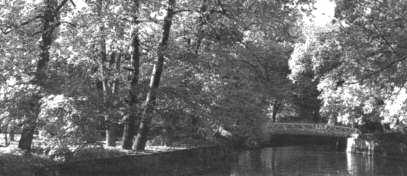
With his many inventions J.P. Johansson not only created something new, but also, which time has shown, something lasting. His inventions as well as his industrial, municipal and social activity have had a large share in the development and shaping of the city. Johan Petter Johansson is the private person that played the most important part in the development of Enköping during the 20th century. More than 100 years after the patents were received for the pipe wrench and the adjustable wrench, these tools still form the foundation for the major production at the present Bahco Tools - the company that he started in 1886. It was Enköping’s first workshop industry that quickly developed into the largest. Still today Today Bahco Tools in the Fanna quarter employs about 400 persons and is still the largest industry in Enköping.The pipe wrench and the adjustable wrench were also the first industrial products made in Enköping to be exported all over the world. More than 100 years later and a a good 50 years after J.P. Johansson’s death the tools are counted among Sweden’s 10 most important inventions The bridge builder An example to the public as to J.P. Johansson’s ability as both a constructor and manufacturer are the two walking bridges over the Enköping’s river. One of them goes over the river in the stream parterre and the other connects Eriksgatan with Munksundet. Both bridges are 100 percent J.P. Johansson’s work. He was a member of the city council and took part in the decision to replace the wood bridge in the stream parterre with a new one. He submitted offers for three different plans and got the order for the most expensive one that cost 800 crowns. He made the bridge in his smithy in Fanna and placed it at it’s present location in the stream parterre. The year was 1893. The next year he got a new order. This time to build a bridge at Munksundet. It cost 1.025 crowns. J.P. Johansson took part in all phases in the development of the bridges. Both bridges are still in their original design and construction and have now served the inhabitants of Enköping for more than 100 years.
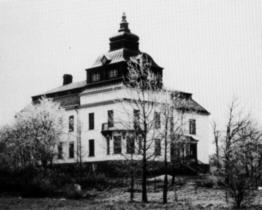
The bridge builder.One of J.P. Johansson’s bridges over the Enköping river. Springhammer Vulkanus J.P. Johansson’s springhammer Vulkanus was superior to every other springhammers on the market. In many cases, it was also technically better than the considerably more expensive steam- and airhammers. It was the best due to it’s big striking power and adjustability during the course of the work. The superior technic was brought about because of one of J.P. Johansson’s patented constructions. Briefly the springhammer Vulkanus consisted of a connecting rod that was joined with an eccentric placed shaft, through which a screw could be displaced along the shaft’s length. When using competing springhammers, the smith first must stop the operation and then make the adjustment utilizing levers after which the machine was started again. J.P. Johansson made the springhammer Vulkanus in large issues quantities here in Enköping and exported them to several countries in Europe. He received many praises that testified to the machine’s superiority. Villa Fannalund Villa Fannalund (Fanna castle) was built in 1905 and was J.P. Johansson’s private residence until his death in 1943. The Johansson family residence had 750 square metres of living space and was absolutely Enköping’s most modern private home. There J.P. Johansson’s innovations and application of new technics had a free scope.
The house was constructed by building contractor L.P. Sten and was seen by people from far and wide. It raised the status of the Fanna quarter that earlier had only low, spread buildings and was a haunt for tramps, jokers and other people on the loose.
The future house in 1905.Villa Fannalund( Fanna Castle) was a high modern habitation house with 750 square metres habitation surface. The Johansson family settled down in it in 1905, the year when building contractor L.P. Sten completed the structure. Awarded a medal Thanks to his many patents and many years as an inventor and industrialist, J.P. Johansson received a lot of attention and great appreciation. On a recommendation from the County Governor, Hammarskjöld, J.P. Johansson was appointed by His Majesty the King in the extra chapter to Knight of the Royal Vasa Order, first class. The Engineer Science Academy (IVA) gave out a memorial medal to J.P. Johansson at a solemnity at Stockholm Concert Hall in 1995. The medal is a reminder of his important achievements for the society in the areas of technic and industry. Johan Petter Johansson is unchallenged as the most important private person in Enköping regarding the development of Enköping during the 20th century. Hans E Söder J.P. Johansson-sällskapet Footnote. To be patentable an invention shall be new and have invention status. It must have technical character, technical effect and be able to be duplicated.
|